Sveaskog
Sweden's largest forest owner compared Arboreal Forest with manual measurements on more than 300 trees. The systematic diameter error was less than 1 mm and the area error about 1%.
Read more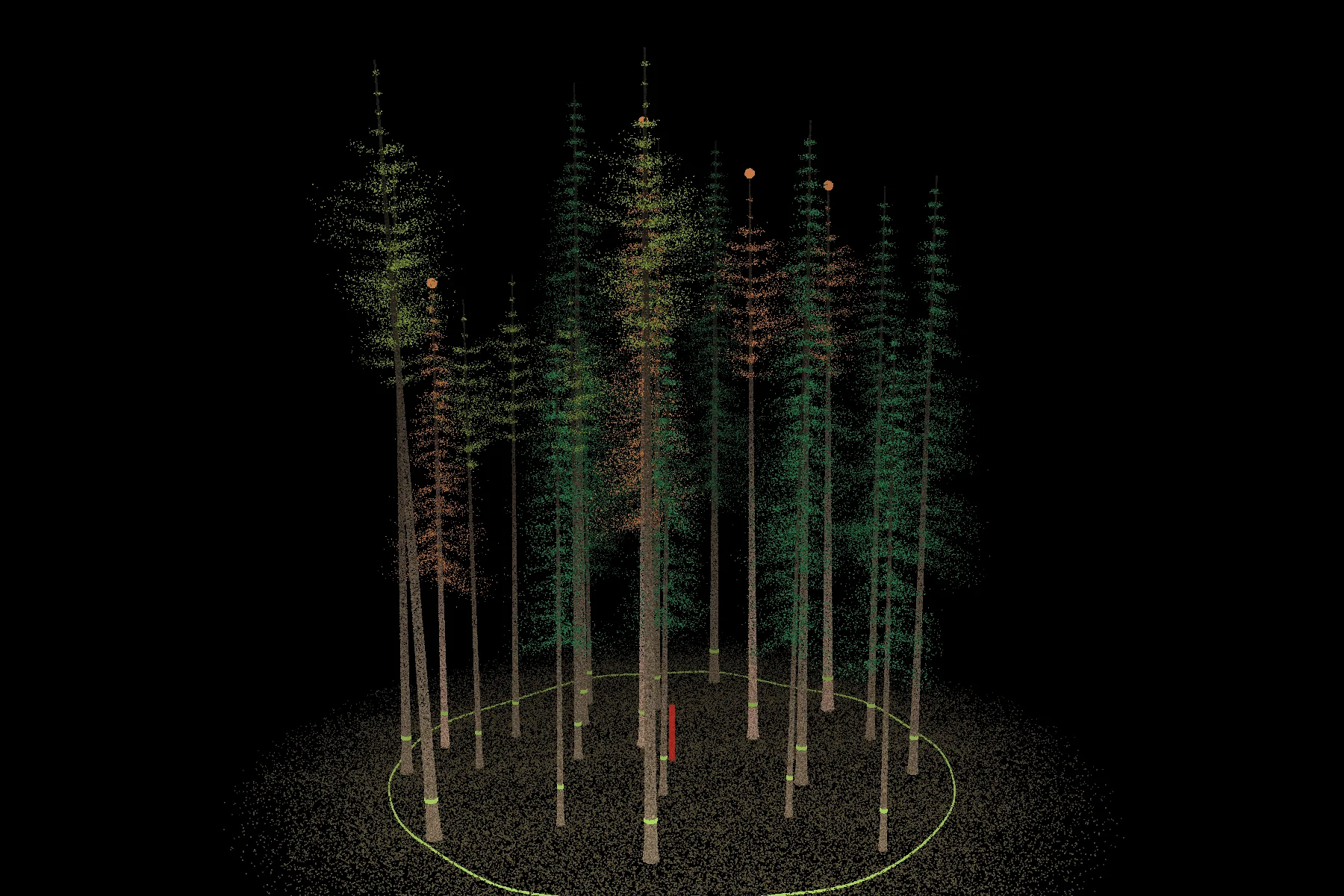
Drag to rotate. Point at a tree to see its measurements.
Download and try for free


With the phone's LiDAR you measure the diameter at breast height of every tree in the plot. The result is basal area and volume per hectare.
Our apps have been downloaded more than 500,000 times and are used in almost 100 countries by forest companies, forest owners, consultants, arborists and researchers.
Sample plots · iPhone and iPad
A complete tool where you could collect data from sample plots with Lidar and AR-technology.
Learn more about Arboreal ForestSingle trees · iOS and Android
Measure tree height, crown width and height with your phone.
Learn more about Arboreal TreeLog tracing · web and API
Trace a log from the forest to the mill with a photo of its end. No tags, no paint.
Learn more about TreeID














Sweden's largest forest owner compared Arboreal Forest with manual measurements on more than 300 trees. The systematic diameter error was less than 1 mm and the area error about 1%.
Read moreThe first peer-reviewed comparison of Arboreal Forest, Katam and Trestima. Arboreal Forest got the highest score (15.5 points, against 12 and 6).
Read moreOur evaluation of Arboreal Forest against a caliper: over 96 % of the diameter measurements are within 2 cm, with a systematic error of 0.2 %. The results are shown per phone and method.
Read moreWith LiDAR, very accurate. Suzano measured the diameter of 10,236 trees with a systematic error of less than 1 mm, and in our own evaluation of Arboreal Forest against a caliper, over 96 % of the diameter measurements were within 2 cm, with a systematic error of 0.2 %. Peer-reviewed studies in Forests (2023) and Ecological Informatics (2025) reached the same conclusion.
No, but it helps. LiDAR makes diameter and distance measurements fast and very accurate, and is found in iPhone Pro and iPad Pro models. Without LiDAR, Arboreal Tree measures height with the AR camera and diameter with the digital tape measure, and Arboreal Forest measures diameter with the camera.
Arboreal Forest is available for iPhone and iPad. Arboreal Tree is available for both iOS and Android.
All apps can be tried for free. Arboreal Forest is a subscription, paid per week or per month. Arboreal Tree is either a one-time purchase or a Basic or Premium subscription.
Yes. You can export measurements, share plot data with colleagues and fetch your data over our REST API, for example into GIS or your own forest systems.
Arboreal is a self-funded Swedish company in Umeå. It was founded in 2018 and started at the business incubator Uminova Innovation.
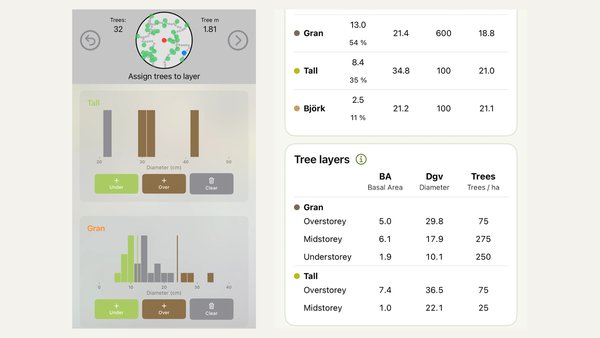
Tree layers, Continuous cover forestry, CCF, Forest inventory ·
Split the trees on each plot into understorey, midstorey and overstorey in Arboreal Forest, and see basal area, diameter and trees per hectare for every layer.
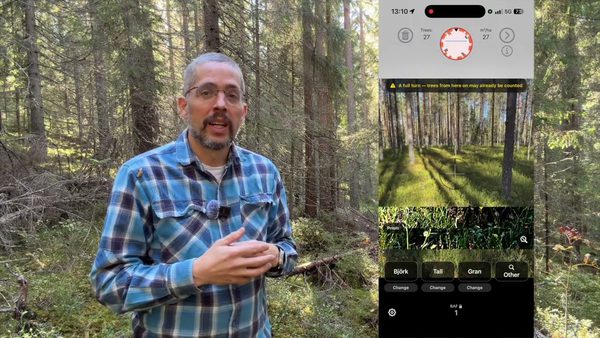
Prism cruise, Variable radius plots, Big BAF, Forest inventory ·
Arboreal Forest now does the whole variable radius plot on your phone – from the prism tree count to the diameter and height of the sample trees, selected with Big BAF.
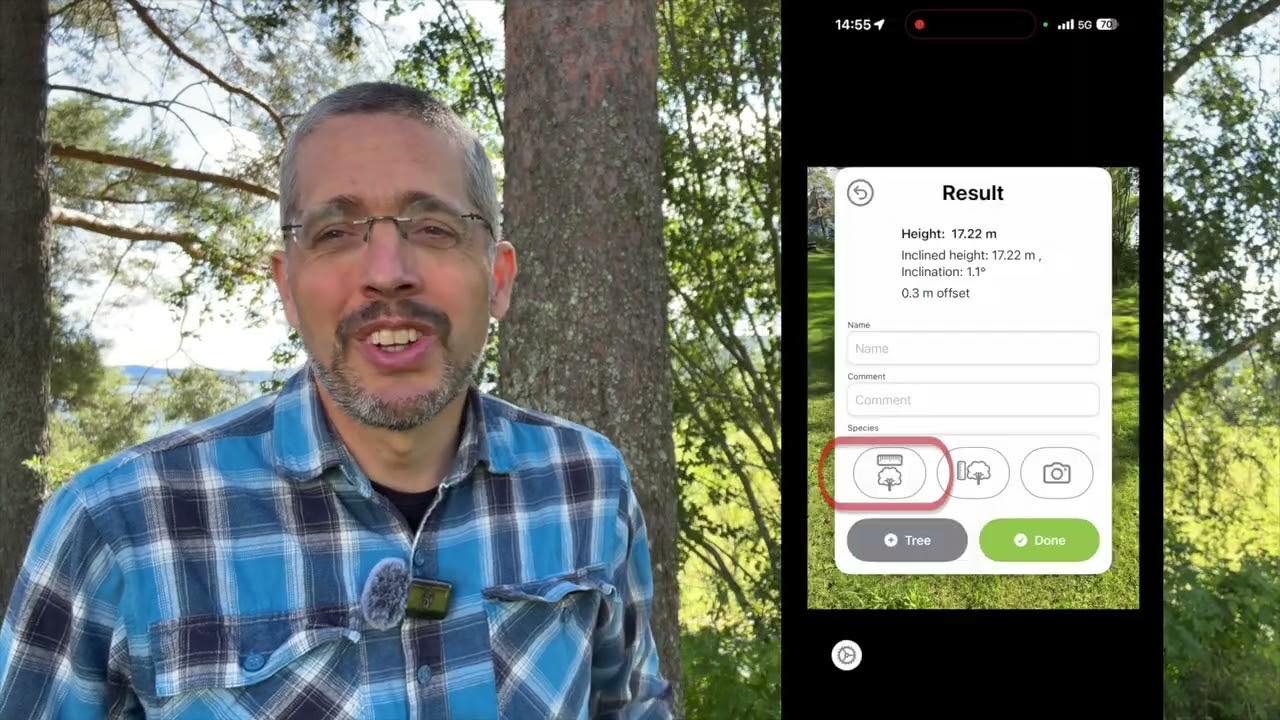
Tutorial, Diameter, Circumference, Crown, Arboreal Tree ·
When we launched, this app was called Arboreal Tree Height. We dropped that last word a while ago — here's everything else that's in there. A new tutorial for the iOS version walks through diameter, circumference, crown shape, crown width and height, and how to measure a tree you can't even get close to. Under three minutes.
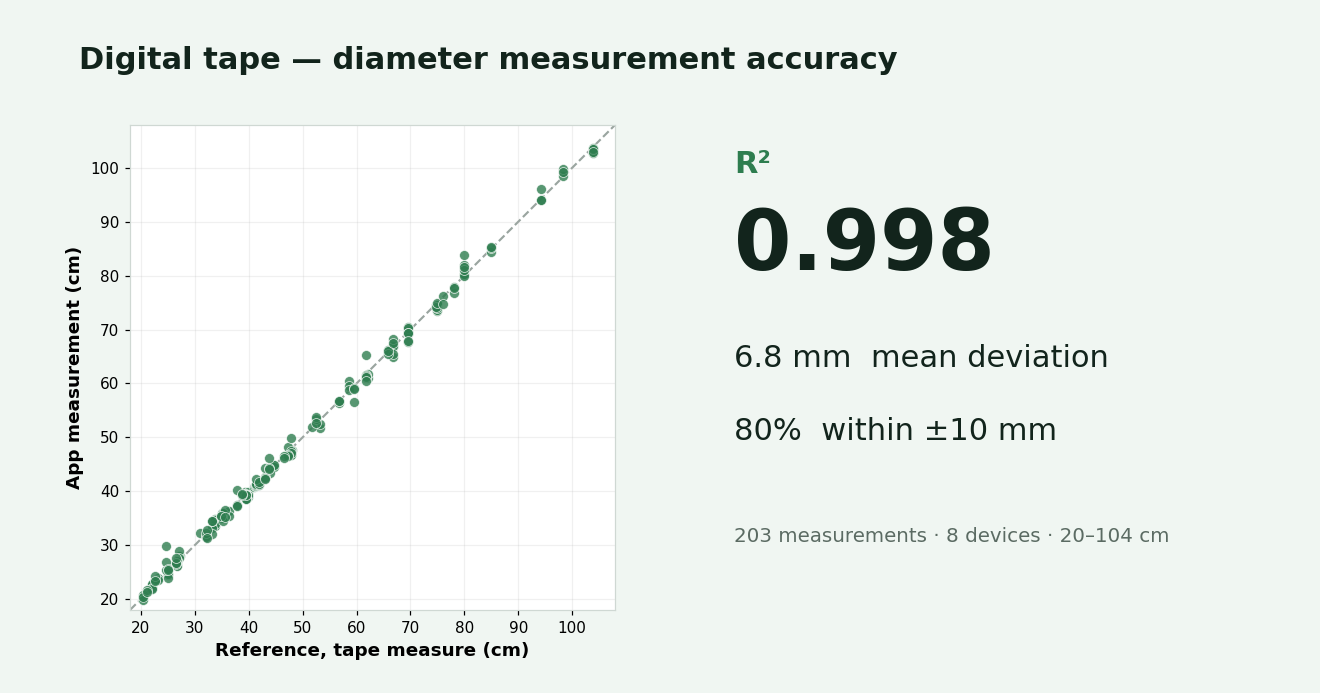
Evaluation, Digital Tape Measure, Diameter, Accuracy ·
We tested the new digital tape measure in Arboreal Tree against a tape measure across 203 measurements and 8 devices. Mean deviation is 6.8 mm and R² = 0.998 — here's the full evaluation.
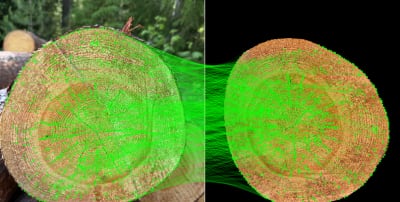
Traceability, Optical Fingerprinting, Log Tracking, Research, TreeID ·
For two decades, recognising a log from the features it already carries — no tag, no paint, no barcode — was a research problem. It's now mature enough to deploy. Here's how the field got here, and what it took to turn it into a working service.
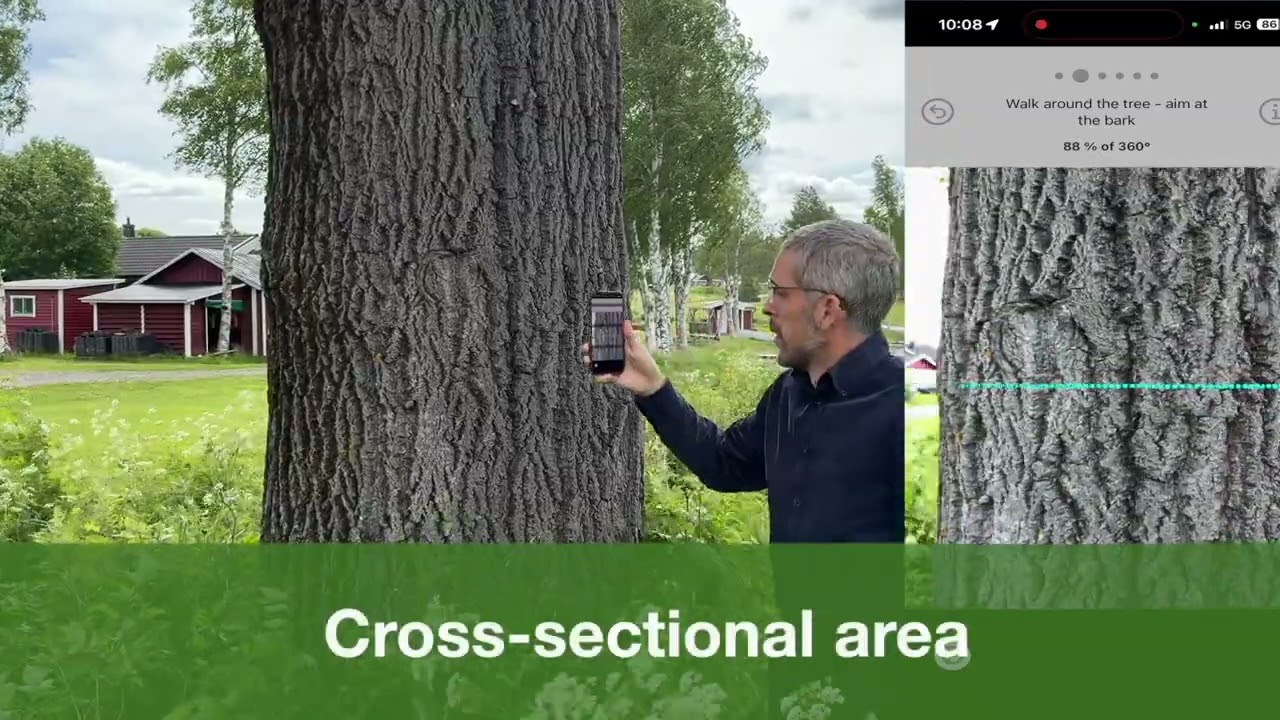
Update, Digital Tape Measure, Diameter, Circumference ·
A new digital tape measure in Arboreal Tree wraps around the trunk and gives you diameter, circumference, and cross-sectional area at once — built for the thickest trees, and it works even on phones without LiDAR.