Tree Scanner and Arboreal validated in three new studies
Johan Ekenstedt
21 Oct 2025
Three new scientific works published this year highlight the performance of Tree Scanner and Arboreal Forest, the smartphone-based apps developed by Arboreal to make forest measurements faster, easier, and more reliable.
Log measurement accuracy
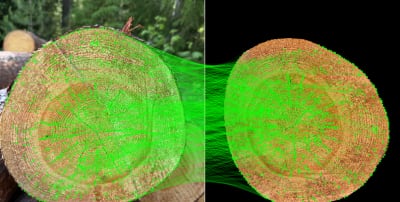
The first study, published in Sensors (Elias et al. 2025), tested Tree Scanner during its prototyping phase for log volume estimation.
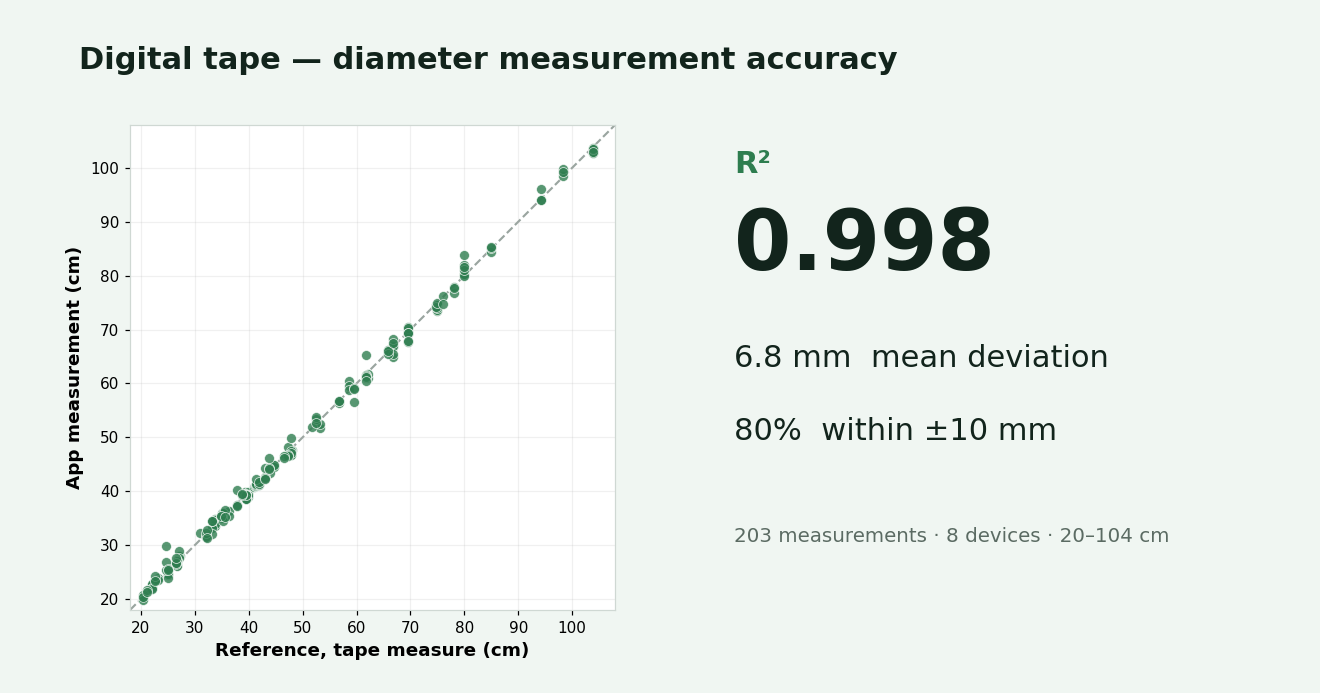
- Accuracy: Very strong agreement with traditional manual methods (R² > 0.98, RMSE = 0.0668 m³).
- Efficiency: Median of 21 seconds per log compared to 29 seconds manually — an improvement of 38%.
- Consistency: Reliable both within and between different users.
- Integration: Highlighted the potential of Tree Scanner to integrate with RFID, Bluetooth tools, remote servers, and species recognition.
In short: Tree Scanner can replace manual log measurements with a faster and equally accurate digital solution.
Forest inventory with basal area estimates
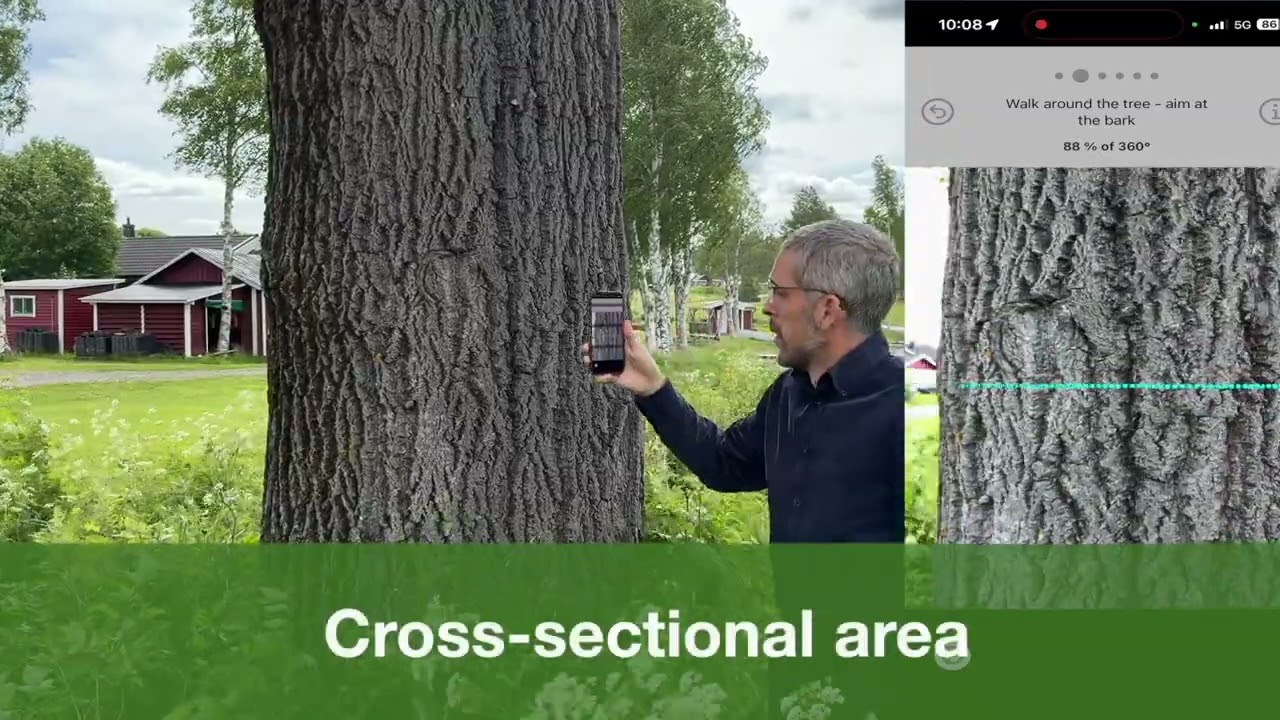
The second paper, in Ecological Informatics (Morocho Toaza et al. 2025), compared Tree Scanner against a professional personal laser scanner (PLS) in 50 forest plots.
- Basal area estimates: Nearly identical to the professional scanner (Bias = 1.95 m²/ha, MAE = 2.29 m²/ha, RMSE = 3.09 m²/ha).
- Time efficiency: 11 seconds per tree compared to 51 seconds per tree with the PLS — and without the extra data processing steps required by the scanner.
- Conclusion: Tree Scanner offers a low-cost, fast, and scientifically accurate option for forest inventory.
Arboreal Forest compared with traditional inventory
The third work, a Bachelor thesis at the University of Lleida (Atcher Soler 2025), compared Arboreal Forest to traditional forest inventory in Scots pine stands (Pinus sylvestris) in the Vall de Lord, Catalonia.
- Variables studied: Diameter, height, basal area, and volume.
- Findings: Arboreal Forest produced results with accuracy comparable to traditional methods while being significantly faster and more cost-effective.
- Efficiency: The study showed that the app reduces both field time and office processing, making it practical for real-world inventories.
- Context: The thesis also discussed the usability advantages of smartphone-based LiDAR, including reduced equipment needs and automatic data storage.
Why this matters
Forestry is moving towards digital tools that combine scientific accuracy with practical efficiency. These three studies — two peer-reviewed papers and one academic thesis — independently confirm that Arboreal’s apps deliver both. Whether measuring logs in the yard or collecting plot-level data in the forest, Arboreal provides reliable results while saving time.
For us at Arboreal, it is encouraging to see our work validated by independent researchers across Europe. Tree Scanner and Arboreal Forest were designed to make forest data collection faster, easier, and more transparent — and now the science backs it up.
References:
- Elias, M., Forkuo, G.O., Picchi, G., Nati, C., & Borz, S.A. (2025). Accuracy of a Novel Smartphone-Based Log Measurement App in the Prototyping Phase. Sensors 25(18): 5847. https://www.mdpi.com/1424-8220/25/18/5847
- Morocho Toaza, J.M., Picchi, G., Nati, C., & Borz, S.A. (2025). Accuracy and time efficiency of a new app developed to source and map single tree data: A comparison to state-of-art LiDAR data collectors in terms of basal area estimates. Ecological Informatics 91: 103417. https://www.sciencedirect.com/science/article/pii/S1574954125004261
- Atcher Soler, A. (2025). Comparació de l'inventari amb LiDAR terrestre mitjançant Arboreal amb l'inventari tradicional en boscos de Pinus sylvestris a la Vall de Lord. Bachelor Thesis, University of Lleida. https://repositori.udl.cat/bitstreams/31b4d657-c6f6-4376-9371-12d407940559/download
Written by

Johan Ekenstedt
CEO and iOS developer at Arboreal. Making it easier to measure, understand and manage trees and forests.
LinkedIn